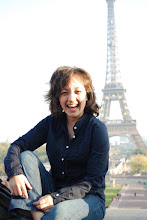
I miss you. Come back State-side.
Love,
Jill
So what is the collective history of Germany? What kind of building can represent that? In this episode, Jill writes a paper and goes geek. Rough draft:
Though Theater des Westens may not be the top priority of most Berlin tourists, the history behind the theatre is still somewhat relevant to the development of entertainment in Berlin and the German-speaking musical world.
Built between 1895 and 1897 by Bernhard Sehring, the theater was originally intended for use as a private concert hall with the ability to house the public in the future. Sehring’s idea was also to make the hall into a “Richard Wagner theatre” with the ability to house a decently sized orchestra with a proscenium to accommodate the staging. The architecture of the theatre itself derives from many different historical styles ranging from the Roman Empire, the Middles Ages, and the Renaissance. Sehring had also incorporated the popular Art Nouveau styles with the peek of the movement began around the same time as construction.. The German movement of this is called Jugendstil (derived from the name of a Munich-based magazine, Jugend: Münchner illustrierte Wochenschrift für Kunst und Leben), though this Germanic form of Art Nouvea was not introduced until 1896, just after the construction of the theatre. The combination of the architectural elements was seen as controversial at the time of the theatre’s construction. Despite controversy, Sehring was certainly no stranger to architecture. Sehring’s architectural influence is evident throughout northern Germany and Berlin primarily in theatre, though many of his pieces were destroyed during World War II. Shortly after his acceptance into Architektenverein zu Berlin, he received first prize for a design competition for Berliner Museuminsel.
In 1895 Sehring began construction on the theatre despite not having a severe lack of funds and the required building permit necessary to take on the project. Needless to say Sehring accumulated enormous debts, but was still able to finish the theatre in just over a year’s time. It was the necessity to build up much more publicized and successful company in order to bring more attention to the theatre. For this, Paul Blumenreich was one of the theatre’s founders alongside Sehring however he had often credited himself as the theatre’s sole founder, saying “[…] und damit habe ich der Kunst der Zukunft ein herrliches Heim errichtet, da, wo ehedem ein schwarzer, schmutziger Bretterzaun stand.” The Theater des Westens GmbH alongside Sehring brought criminal charges against Blumenreich for his dishonorable intentions. He was convicted, but the charges were mild. Despite his disorderly conduct, the theatre had benefited financially. Though he is considered one of the theatre’s founders, Blumenreich was unable to help but leave a bitter reputation behind.
With Sehring considered to be the theatre’s masterful founder and artist, an inscription inside of the theatre reads, “Hanc domum artis colendae causa condidit. Anno MDCCCLXXXXVI Bernhard Sehring” (This house created by Bernhard Sehring in 1896 for the care/appreciation of the arts). Sehring remained the theater’s owner until his death in 1941.
The theatre had opened with mostly dramatic pieces, but since then it was used primarily as an opera and operetta house. In 1935, the theatre was used as part of the Kraft durch Freude Nazi program with a production of Beethoven’s Fidelio. The program aimed to proved organized leisurely activities to those in the German work force. The mentality behind Kraft durch Freude was “relaxation for the collection of strength for more work.” The government provided events directed towards the working class that were affordable and enjoyable, paying particular attention to both vacation times and the arts.
One of Theater des Westens’ most important functions was what it had provided to the Deutsche Oper. In 1944 during World War II, the building was partially damaged by a bomb, but the damage feigned in comparison to the Deutsches Opernhaus. Theater des Westens’ most heavily damaged areas were the roof, foyer, and the administrative offices. The roof was temporarily restored and soon housed the Deutsche Oper, which remained there from 1945-1961.
Looking at the history of Theater des Westens up until 1961, the house seems like nothing more than merely a place for pre-existing operas and operettas. There seems to be little influence on what we see in Berlin or in Germany today. But for the theater and musical theatre community, Theater des Westen’s most pivotal performance may have been that of the German translation of Alan Jay Lerner and Frederick Loewe’s musical My Fair Lady, which opened at the theatre on October 1, 1961.
My Fair Lady’s libretto and story is based strongly upon the English language that the ability for the piece to be translated into a German representation spoke strongly to the theatre community, particularly to Berlin, which had been divided by the wall only months before the opening of the production. The piece, which relies heavily upon English/British speech dialects including cockney and Queen’s English, was translated to reflect upper-class German dialects and a heavy Berlin dialect or “Berlinische”. Despite the shocks sent through Berlin with the construction of the wall, the production was a success.
So successful was the production and its translation that it was able to transcend the divided Berlin. Five years after the production premiered at Theater des Westens, it was performed at the Metropoltheater in East Berlin. There were, of course differing interpretations of the meaning of the production. In West Berlin, it depicted a traditional rags-to-riches story while in East Berlin, it was a critique to the failures of capitalism.
Theater des Westens became the prime musical theater in Germany with many German-language musical premieres. This included original German-language musicals as well as the German-language translations of English productions such as Cabaret and A Chorus Line. The theatre may very well have shaped the creation of German musical theatre. The once exclusively English/American-based theatrical art started to spread to German composers and writers thanks to the success of the productions that began at Theater des Westens.
Musical success continued for years into the 90s when an original German production of Blue Jeans ran sold-out for months on end. But the theater hit financial woes after the production finally closed and in 2002 the Berlin Senate privatized the house over to Stage Holding, one of Europe’s most successful musical theatre production companies, headed up by Dutch producer Joop van den Ende. Stage Holding/Stage Entertainment has also been the production company behind nearly every major main-stream theatrical musical in mainland Europe. The productions are usually translated from English and have continued to be incredibly successful throughout Europe. Productions include West Side Story, Les Misérables, and Beauty and the Beast among others. After a renovation done by Stage Holding/Stage Entertainment, the gala opening of the German production of Les Misérables opened at Theater des Westens on September 26, 2003.
With the success of musicals at Theater des Westens, the shape of the German musical has been changing as well. Most notably are composer and lyricist duo Sylvester Levay and Michael Kunze who have created the most successful musicals to come out of the European mainland (the most successful musicals still belong to American and British writers). Unique to them is that Levay/Kunze are nearly as successful as their American/British counterparts, but their pieces are in German. With the continued funding from the Stage Holding production company, their many successes include Mozart!, Elisabeth, and Rebecca. In fact, Elisabeth is the most successful musical to come from the European mainland. With the growing popularity of the Germanic musical, Theater des Westens continues to revive and embrace the productions. Of the original German pieces out there, Theater des Westens is still considered to be the cultural and musical pinnacle for performances.
Perhaps what’s so truly interesting about the effect of Theater des Westens on Berlin identity and culture has been its ability to house an artistic style that was once foreign to Germany. With the success of productions such as My Fair Lady and Theater des Westens’ continued commitment to musicals, the ability for the art form to grow has certainly helped the arts scene in Germany. The continued success of the German musical makes it one of the top in the world, rivaling the British-based productions (from mostly Andrew Lloyd Webber and Cameron Macintosh).
Theater des Westens shows a continued wave of musical development in Germany. Its memory seems almost forgotten at times considering it has housed mostly revivals and translated productions as opposed to new and original productions. But as far as a collective memory for Berlin and Germany, it’s important to remember the houses’ ability to constantly bring people together through the arts. This goes for anything from the house’s original productions, the Kraft durch Freude, or Stage Holding/Stage Entertainment’s commitment to bring international musicals to Germany. Theater des Westens is probably one of the few houses that can boast a repertoire of theatre that has shown a chronological progression of music theatre from opera to modern musical theatre.
Work Cited
Publicity Information from Katja Borch, PR Manager of Theater des Westens.
Janberg, Nicolas. Theater des Westens. Nicolas Janberg’s Structurae: International Database and Gallery of Structures. December 14, 2008.
Jansen, Wolfgang. My Fair Lady: Die deutsche Erstaufführung 1961 Im Berliner “Theater des Westens” Berlin. Weidler Buchverlag Berlin. 1992.
Nandi-Pietschmann, Jacinta. Musical Theatre: My Fair Lady. Expaticas. December 15, 2008.
Pipes, Jason. Kraft durch Freude. Feldgrau. December 16, 2008.
http://architekturmuseum.ub.tu-berlin.de/index.php?set=1&p=79&Daten=99904
http://www.bbc.co.uk/homes/design/period_artnouveau.shtml
http://www.berlin.de/stadt/en/krz_4.html
http://www.metmuseum.org/TOAH/hd/artn/hd_artn.htm
http;//www.morgenpost.de/kultur/article746515/My_Fair_Lady_ist_zurueck_in_ Berlin_mit_Laengen.html
http://new.heimat.de/deutscheoperberlin/start/?id_language=2
http://www.stadtentwicklung.berlin.de/bauen/wanderungen/en/s2_theaterdeswestens.shtml.
http://www.stageholding.nl/html/272_391.html
Heath Campbell and his wife, Deborah, are upset not only with the decision made by the nearby ShopRite, but also with an outpouring of angry Internet postings in response to a local newspaper article about the cake.
Heath Campbell, who is 35, said in an interview Tuesday that people should look forward, not back, and accept change.
"They need to accept a name. A name's a name. The kid isn't going to grow up and do what (Hitler) did," he said.
After ShopRite refused the request for the cake as inappropriate, the Campbells got a cake decorated at a Wal-Mart in Pennsylvania, Deborah Campbell said.
About 12 people attended the birthday party on Sunday, according to Heath Campbell.
The Campbells' other two children also have unusual names: JoyceLynn Aryan Nation Campbell turns 2 in a few months and Honszlynn Hinler Jeannie Campbell will be 1 in April.
Heath Campbell said he named his son after Adolf Hitler because he liked the name and because "no one else in the world would have that name."
Campbell said his ancestors are German and that he has lived all his life in Hunterdon County, New Jersey, which is across the Delaware River from Easton.
Sarcasm finds medical use in dementia detection
SYDNEY (AFP) – Sarcasm may be the lowest form of wit, but Australian scientists are using it to diagnose dementia, according to research published on Friday.
Researchers at the University of New South Wales found that patients under the age of 65 suffering from frontotemporal dementia (FTD), the second most common form of dementia, cannot detect when someone is being sarcastic.
The study, described by its authors as groundbreaking, helps explain why patients with the condition behave the way they do and why, for example, they are unable to pick up their caregivers' moods, the research showed.
"This is significant because if care-givers are angry, sad or depressed, the patient won't pick this up. It is often very upsetting for family members," said John Hodges, the senior author of the paper published in "Brain".
"(FTD) patients present changes in personality and behaviour. They find it difficult to interact with people, they don't pick up on social cues, they lack empathy, they make bad judgements," he told AFP.
"People with FTD become very gullible and they often part with large amounts of money," he said, adding that one in 4,000 people around the world are afflicted with the condition.
Researchers began studying the role of sarcasm in detecting FTD because it requires a patient to spot discrepancies between a person's words and the tone of their voice, Hodges said.
"One of the things about FTD patients is that they don't detect humour -- they are very bad at double meaning and a lot of humour (other than sarcasm) is based on double meaning," he said.
The research, conducted in 2006-07, put 26 sufferers of FTD and 19 Alzheimer's patients through a test in which actors acted out different scenarios using exactly the same words.
While in one scenario, the actors would deliver the lines sincerely, in others they would introduce a thick layer of sarcasm. Patients were then asked if they got the joke, Hodges said.
For example, said Hodges, if a couple were discussing a weekend away and the wife suggested bringing her mother, the husband might say: "Well, that's great, you know how much I like your mother, that will really make it a great weekend."
When the same words were delivered sarcastically and then in a neutral tone, the joke was lost on FTD patients, while the Alzheimer's patients got it.
"The patients with FTD are very literal and they take what is being said as genuine and sincere," said Hodges.
FTD, often referred to as Pick's disease, is similar to Alzheimer's in that it involves a progressive decline in mental powers over a number of years, but FTD affects different regions of the brain.
"It can be very difficult to diagnose in early stages and to separate from depression or, later on,schizophrenia or personality disorders," Hodges said.
The sarcasm test could replace some more expensive and less widely available tests for dementia, he said.
When questioned about the applicability of the test to people from countries not renowned for their appreciation of sarcasm or irony, Hodges said the test could be modified.